Models (14–16): Genetic Inheritance
As every biology teacher knows, genetics is a topic bursting with essential vocabulary. Yet, it’s much more than a topic of memorisation. In Teaching Meaning, I distinguish between content details and key content distinctions. Students must know the content details if we are to discuss anything, but they only gain meaning through key aspects that must be grasped. In this topic, discerning the allele is what gives meaning to everything else. And, therefore, it needs to be discussed and explored at length. How do we explore such crucial distinctions? We vary them and ask, “What if it were different?”, and look at them from multiple perspectives.
What is DNA?
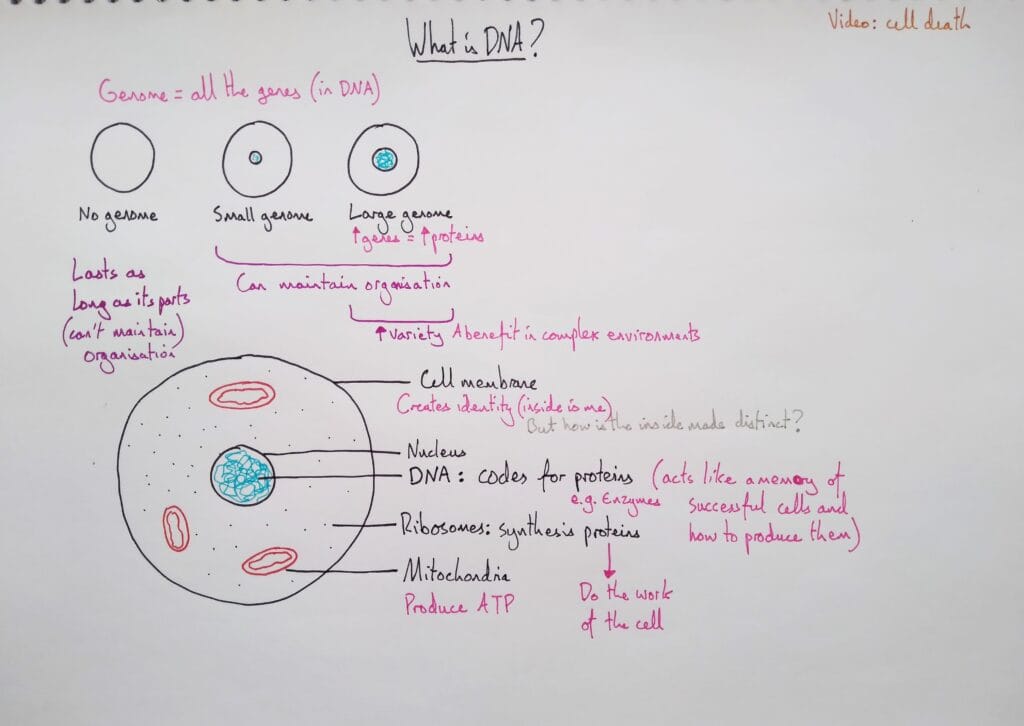
Genetics is often taught in school like a Sudoku puzzle; students can solve inheritance problems without understanding what they mean for the organisms we observe. Letters are used as symbols to represent alleles, but students aren’t sure what alleles really are, and the difference they make. It’s best, then, to begin before symbolism, and go back to the meaning of DNA itself and our evolutionary history. DNA, I tell them, acts like a memory of successfully self-producing cells. We inherit, then, a memory for a way of being that has worked in the past. And this memory allows organisms to persist over time, to self-renew. I add one last distinction as a simple rule to follow: the larger the variety of problems an organism must deal with, the larger its genome must be. This is the law of requisite variety that I explain in Difference Maker, and Teaching Meaning.
Genomes
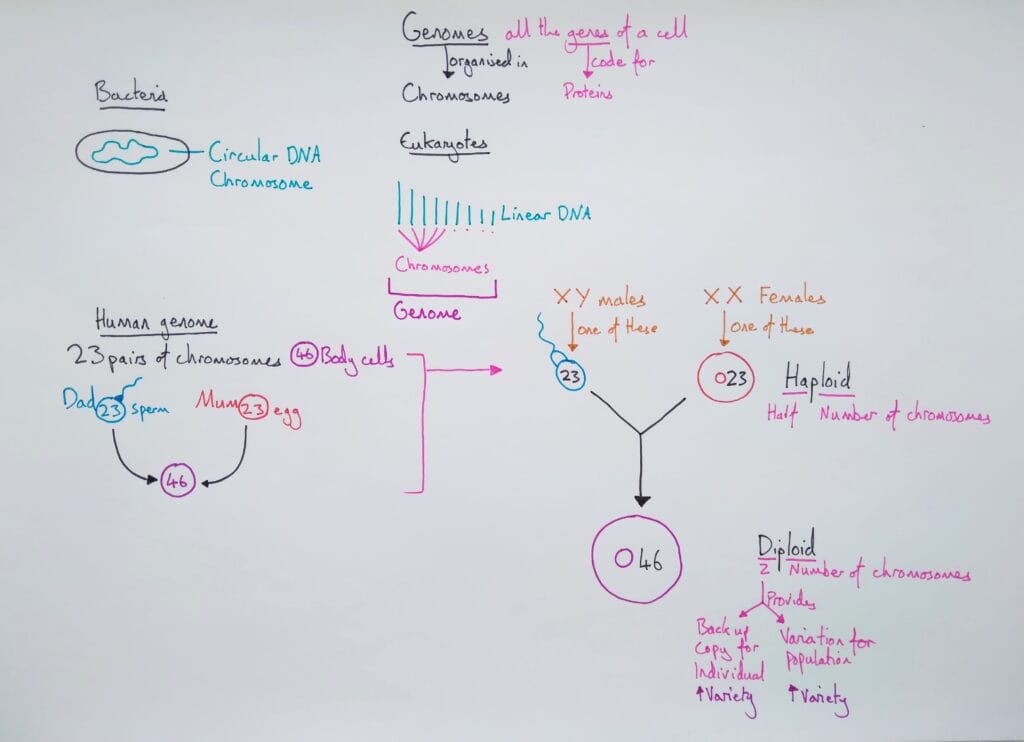
The distinction between haploidy and diploidy is essential for understanding inheritance, and, of course, our own identity. The haploid-diploid system is the best fit in evolutionary terms. When cells drop to a haploid state, each gene is exposed and can’t hide behind another allele. Selection is felt most strongly, therefore, on gametes; if an allele is mutated away, or combines badly with others, the gamete is likely to be unviable. Conversely, the diploid phase adds new variety to both the individual and the population. Following the law of requisite variety, which I explain to biologists in Difference Maker, this allows individuals and populations greater ability to adapt.
Genes, alleles, and mutations
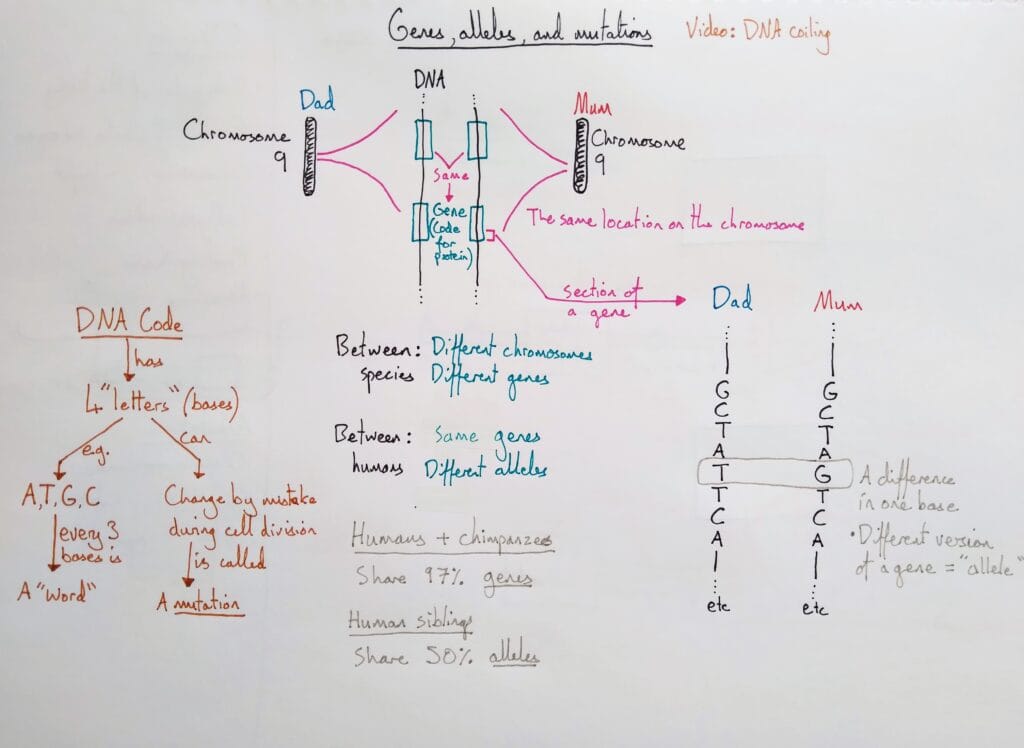
This is the lesson in which we get to the heart of the distinction between alleles and genes. Yet telling students that an allele is “a version of a gene” doesn’t go far enough. Meaning can be found in the distinction by exploring the difference it makes when we think about our relations. For example, here’s the model I present: when we discuss the percentage of DNA shared with chimpanzees, we’ll refer to genes. We share many genes with other species. When looking at human siblings, however, we should expect to find that they have the same genes (they’re both human, so they have the set of genes associated with humans). We must now look at different versions of those genes to explain differences between siblings. So the percentage figure relates to shared alleles.
The effects of genes on phenotype
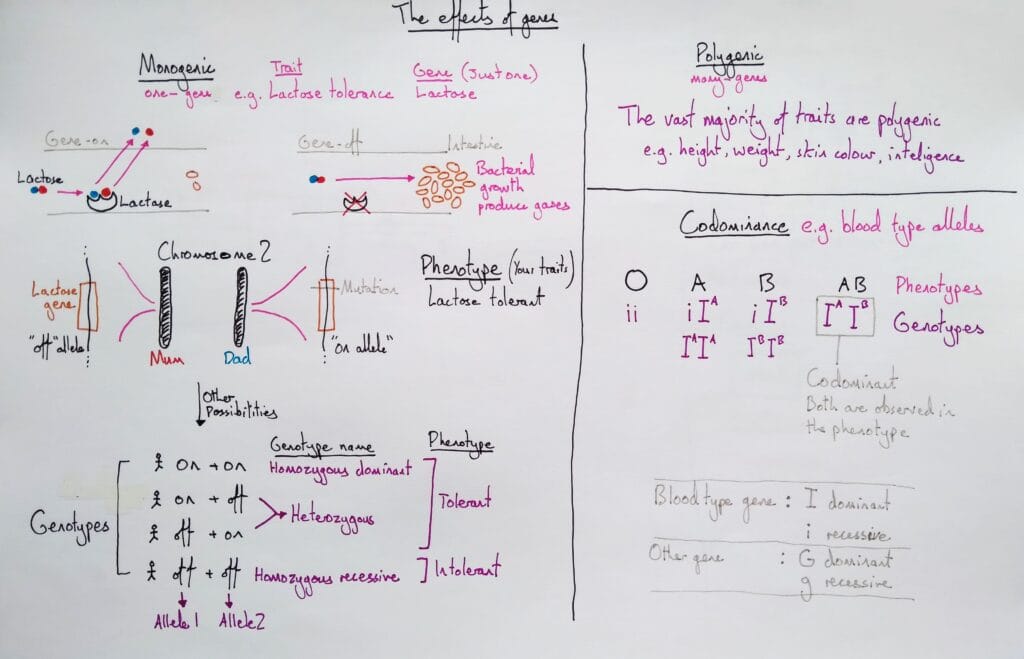
Teaching the Mendelian model brings grave dangers, as I explain here and here. It’s key that students understand that Mendelian patterns are very rare. Otherwise, they begin to think that genes determine who we are: if you have this allele, you are this way. Mendel’s work didn’t tell us anything about how we develop, just how we inherit our genotype. Nevertheless, ensuring I’m careful with this, my favourite example for teaching the dominant-recessive relationship is lactose intolerance. It’s a clear Mendelian pattern that students can relate to.
Genetic grids (Punnet squares)
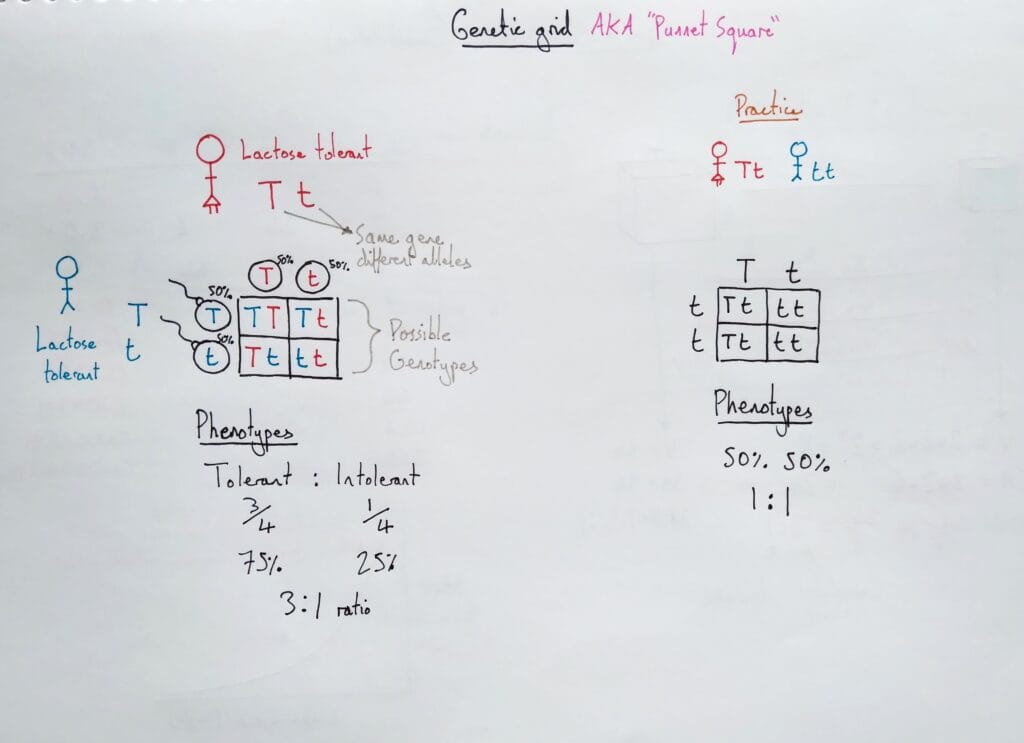
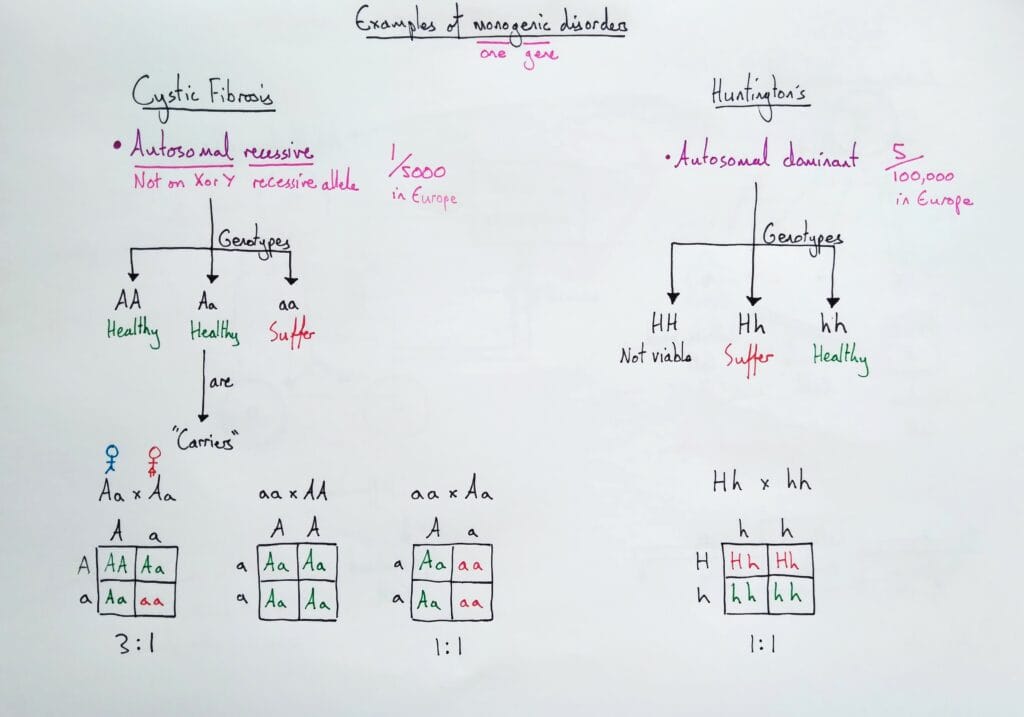
As I mentioned, students mustn’t learn genetics as Sudoku-like puzzles: solvable without any meaning at all. My argument in Biology Made Real is that meaning, in biology, always arises from understanding the difference things make to the ways of living of organisms: what something allows or prevents them from doing. I recommend, therefore, some videos on these genetic conditions that relate to how people live with them: Ryan’s story with cystic fibrosis, Tamilore’s story with sickle cell disease, Luke’s story with Huntington’s.
Learn how to teach this way through my books: