Models (14–16): Digestive system
Digestive system structure and function
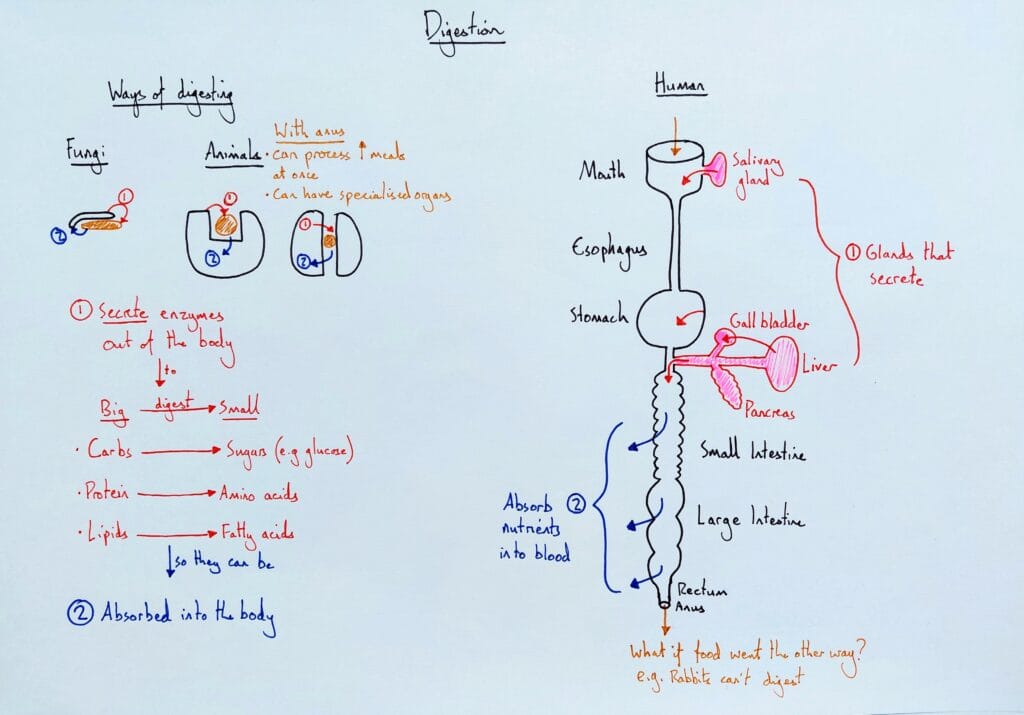
We don’t begin looking at the digestive system by analysing its parts, but by seeing its function in maintaining an organism’s way of life. This, I argue in Biology Made Real, is what gives meaning to biology. It’s amazing what a simple vote can reveal about the meaning students have already made. I typically begin asking students if plants have digestive systems, and by age 14, many still vote that they do, or vote that they’re unsure. We must begin, then, at the beginning. Once reviewing the idea of autotrophy (and photosynthesis) compared to heterotrophy, I want students to see that there are various ways of achieving digestion. But, ultimately, those ways all follow the same pattern: first, organisms secrete enzymes out of the body, then absorb the products into the body once they are small enough. Then we draw the human digestive system, noting where the parts are within our own bodies. And, we visualise the two-step pattern of digestion across our system. To check the meaning they’ve made of this pattern, I ask them to vote: “What if the food were to travel from anus to mouth?” Would the rate of absorption increase, decrease, or stay the same?” Many vote correctly, but others vote that it would increase, arguing that you can begin absorbing more quickly. Discussions addressing this are how I typically finish the lesson.
Digestion in the mouth and stomach
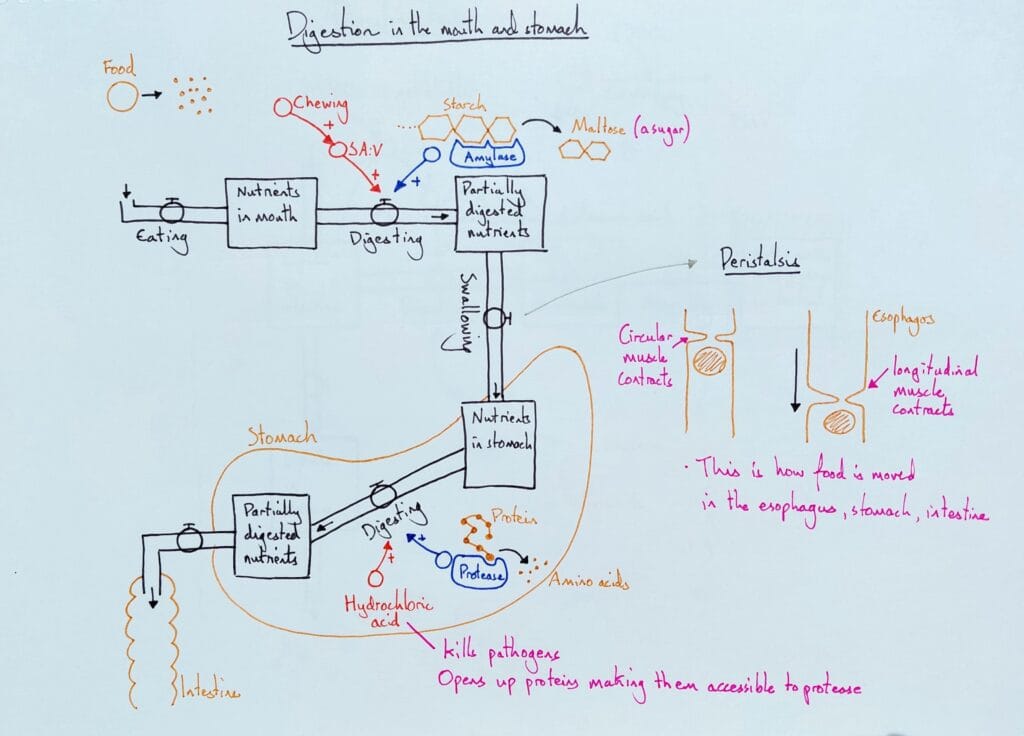
This lesson covers several separate functions within the system: physical digestion to increase SA:V, chemical digestion via enzymes, and transport via peristalsis. Much of the meaning making in the lesson arises from relating the content to lived experiences. For example: indigestion from lack of chewing, sweet-tasting potato crisps that have been stuck in teeth for a while, being able to swallow whilst hung upside down, acid reflux, and proton pump inhibitors. As always, however, I only partially draw the stock and flow structure and have students identify missing labels and whether connections should be positive or negative. Learn how to teach with stock and flow models in my book, Difference Maker.
Digestion in the intestine
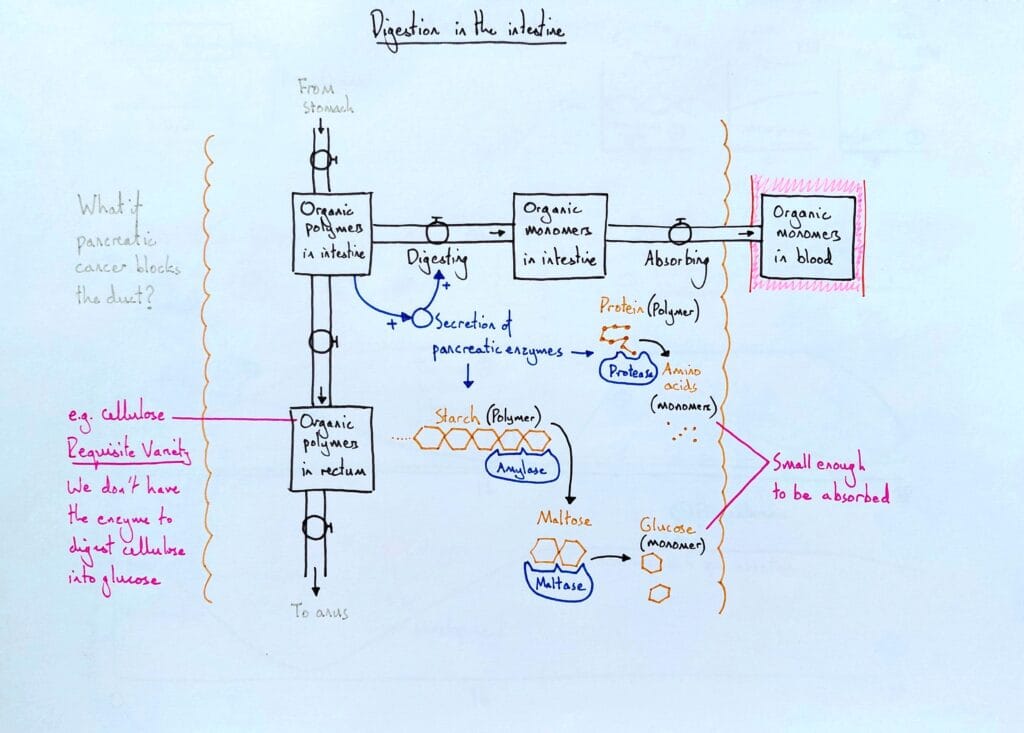
This lesson makes the most fundamental distinction clear: if you have the right enzymes, you can digest and absorb; if you don’t, you can’t. This is apparent in the stock and flow structure, which I draw first. We discuss the meaning of “polymer” and “monomer” and teach them about cellulose and our lack of a cellulase. The variety of enzymes we have must match the variety of foods we need to digest. This is the law of requisite variety I explain in Difference Maker. As we don’t have a cellulase, we can’t adapt to a diet based on cellulose. Yet, humans learned to circumvent this problem through animal husbandry: herbivores, such as cattle, would digest cellulose-rich plants, and then humans would consume the cattle. In other words, cattle herding could be seen as a form of increasing our variety of options for digesting.
Digestion of lipids
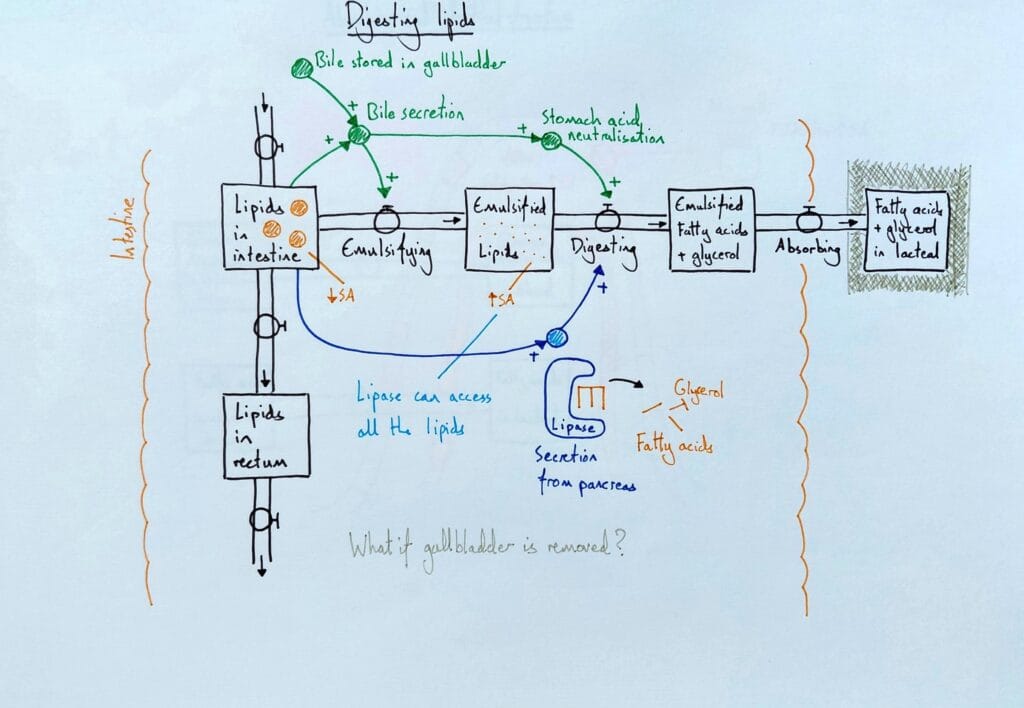
As lipids are hydrophobic, a separate lesson is required to discuss their digestion. I begin with a demonstration of how water and oil don’t mix, even after shaking. The problem for the organism is that the enzymes are in the water and the lipids are out of it. An emulsifier, like soap or bile, is required to bring water and lipids together. In this model, I decided to linearise a process that is really simultaneous. Firstly, the model suggests that emulsification occurs, then digestion begins. Students have told me how this is much easier to understand as they get to grips with the idea. As I explain in Teaching Meaning and Difference Maker, to trigger meaning making, a variation is required. In this case, I ask students what would happen to someone who has their gallbladder removed.
Absorption and intestinal structure
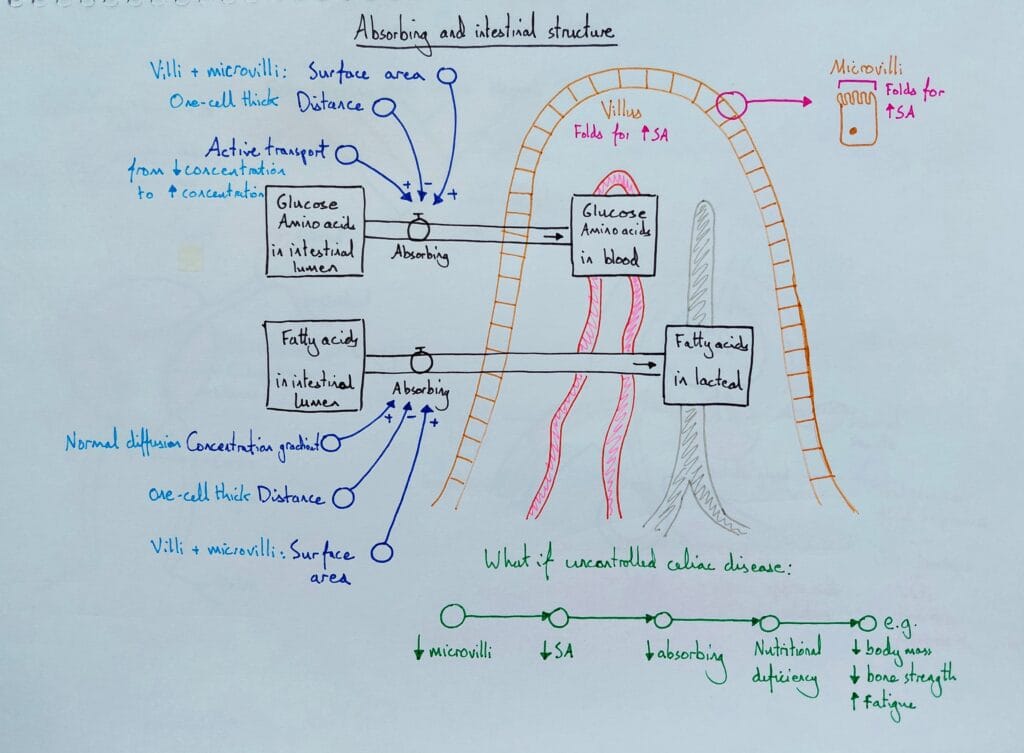
This lesson brings together what is, at this point in my course, a known pattern: exchange surfaces have evolved high surface areas and short diffusion distances, and are powered by concentration gradients, or active transport. I help students make meaning through a variation: what happens in someone with uncontrolled celiac disease that diminishes the number of intestinal cells and, therefore, their surface area?
Learn how to teach this way in my books: