Models (13–16): Ecology
This topic brings together core principles of population ecology and ecosystem ecology. Ecology is often a topic left till last. As I explain in Biology Made Real, this is likely to inhibit meaning making. Many biology course organise their topics by size, from molecules to ecology, rather than by meaning. As humans, medium-sized mammals, meaning arises from understanding how biology affects our (or other organisms’) way of being. We also make meaning of the landscape we move and live in as whole organisms. This is why my biology course begins with “animal ecology” when students are 11-years old, and we continually circle back to it. Another reason why I wanted this topic to come earlier is the importance of young people being able to adequately enter conversations on climate change.
Population controls
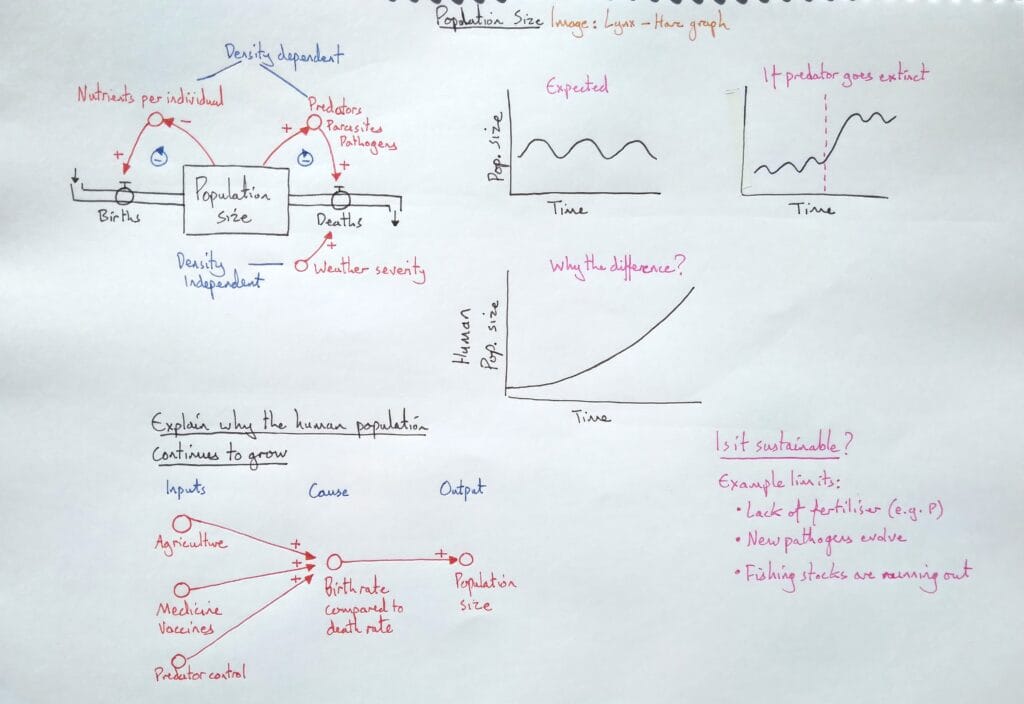
I explain this lesson here.
Energy loss from food chains
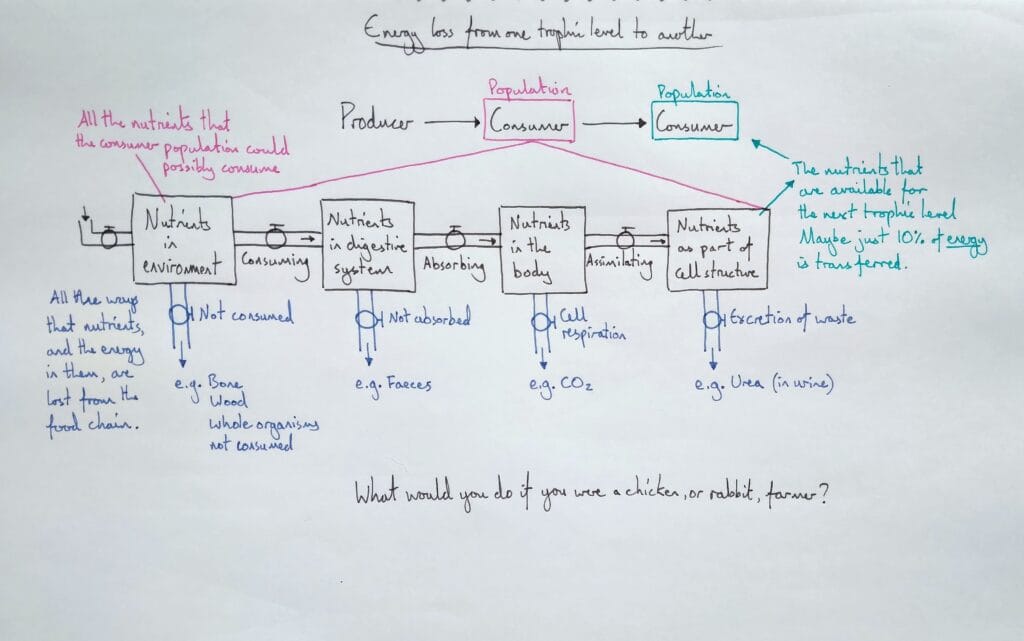
This concept lends itself perfectly to a stock and flow diagram. Learn how I teach with stock and flow diagrams in Difference Maker, and see how I introduce them to students here.
Energy flow through ecosystems
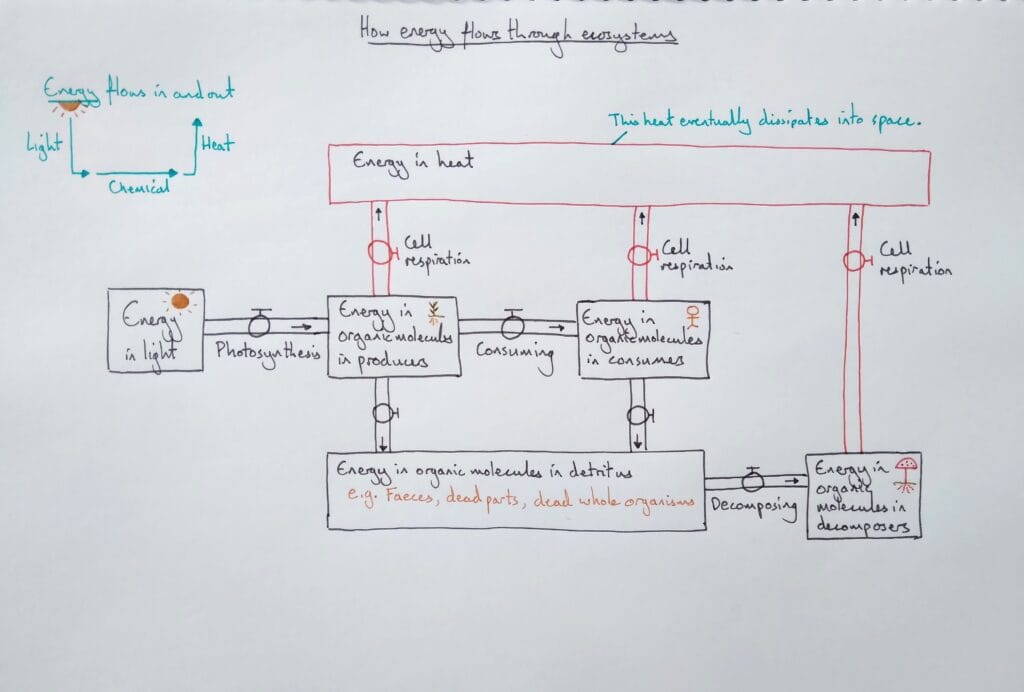
This concept lends itself perfectly to a stock and flow diagram. Learn how I teach with stock and flow diagrams in Difference Maker, and see how I introduce them to students here.
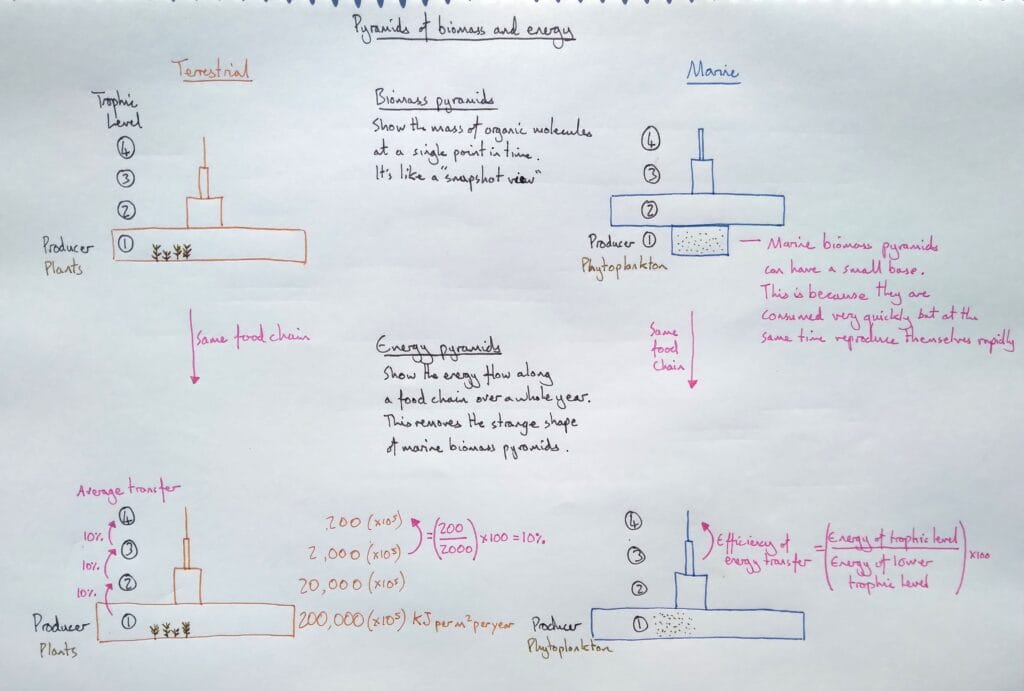
Pyramids of biomass and pyramids of energy
Carbon cycle: photosynthesis & respiration
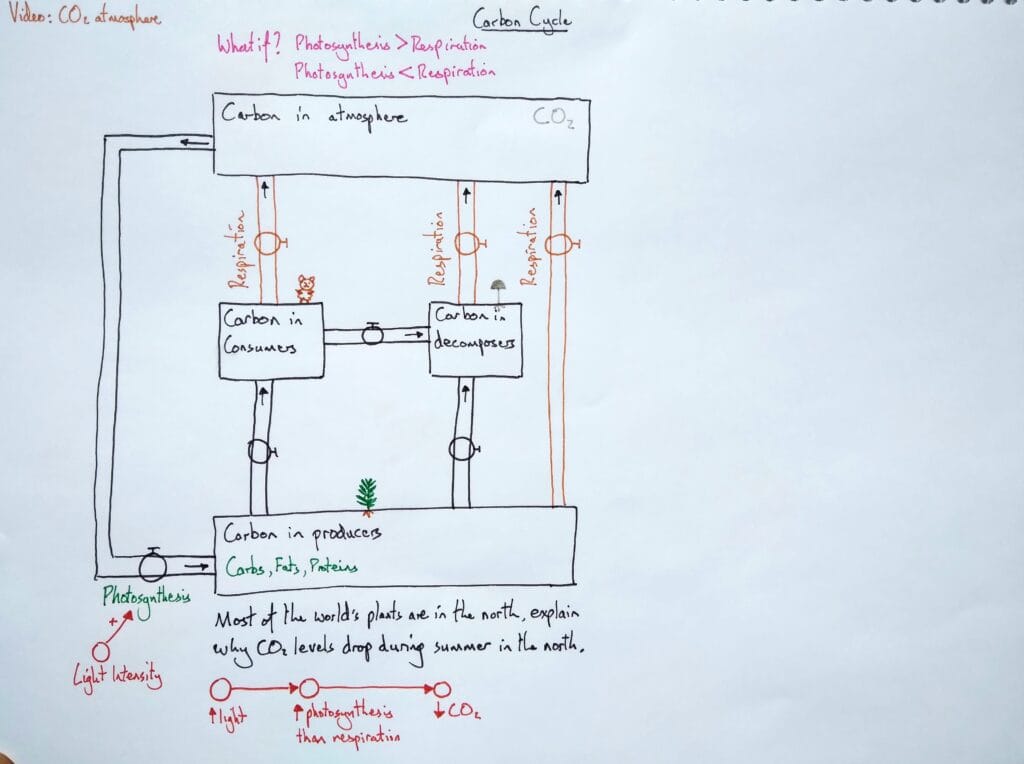
This is the first part of the model; the next, including combustion, will be added in the next lesson. The purpose is to focus directly on the relationship between photosynthesis and respiration in the cycle. This allows students to make sense of, and explain, the seasonal fluctuations of carbon dioxide in our atmosphere. This will also allow students to make sense of decreases in carbon dioxide in the atmosphere despite the general upward trend.
Carbon cycle: combustion
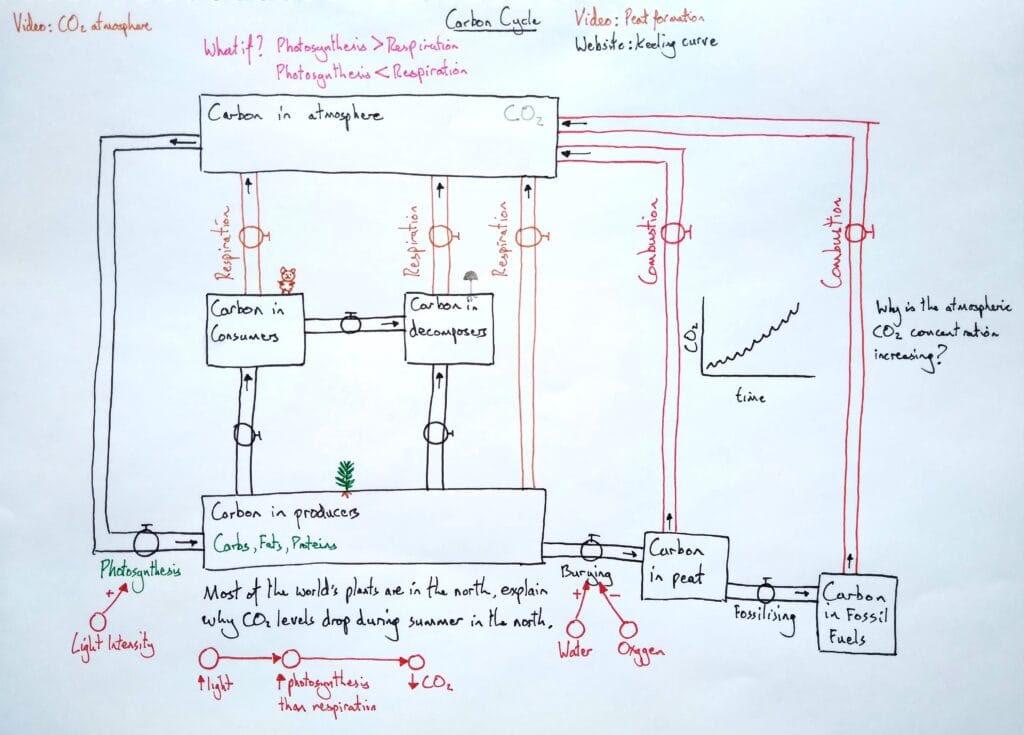
In this second lesson, combustion is added. This requires understanding the production of peat and fossil fuels. With the model complete, students can make sense of the Keeling curve.
Earth energy balance
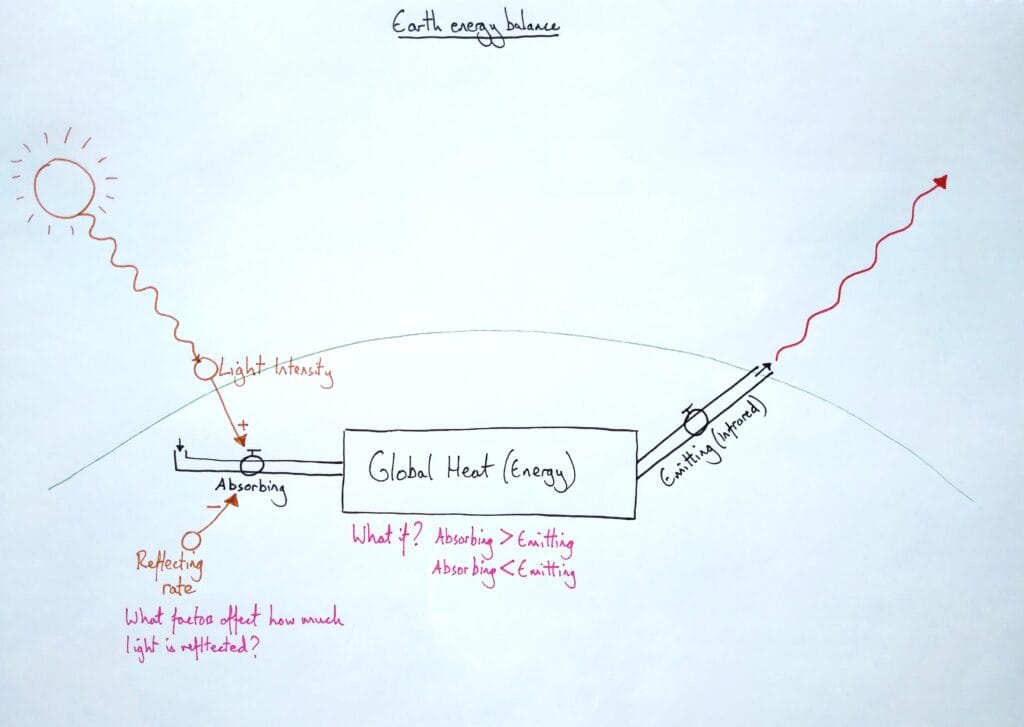
This is another example of a model built over two lessons. In this first lesson, just the idea of energy balance is discussed. There are several bits and bobs that students need to understand, like the difference between light and infrared. Once the model is built, students can explore: What if there’s more absorbing than emitting? And what factors would affect the rate of absorption?
Greenhouse effect
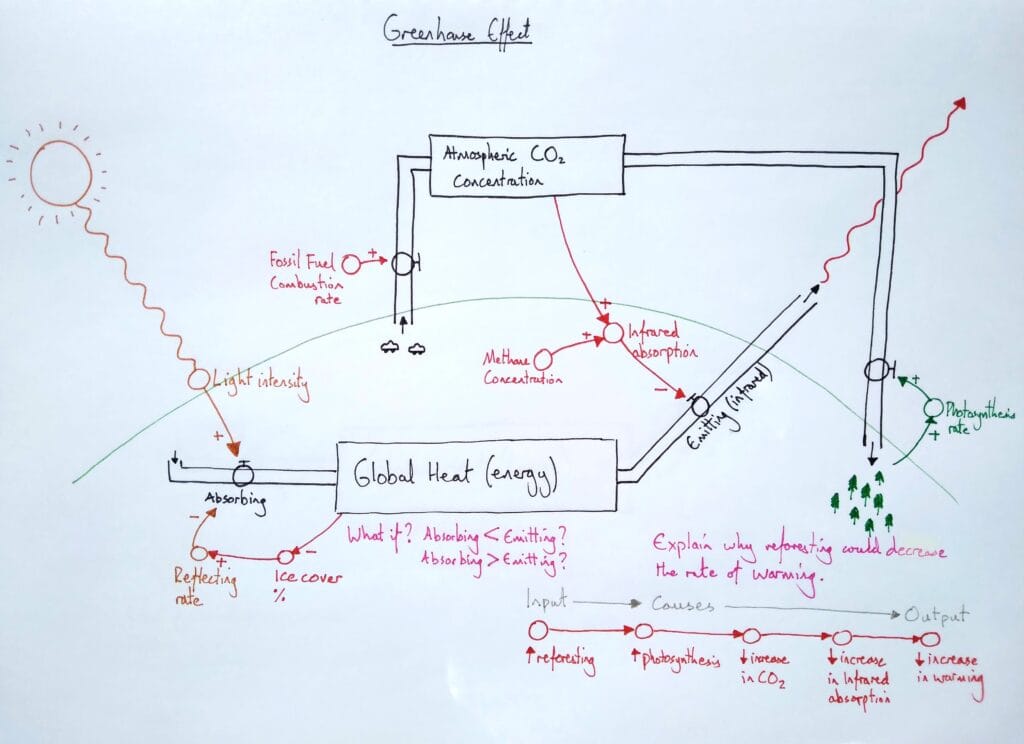
In this second lesson, the greenhouse effect is added with emphasis on carbon dioxide. In my lessons with 14–16-year-olds, I return to this model and explore more factors that affect the rate of emission (such as other greenhouse gases).
Learn more about teaching through models and conversation in my books: