Models (11–14): Plants
In earlier topics, I wanted students “to get a feel for the animal”. This involved looking at the whole organism in terms of autopoiesis (self-producing) from three perspectives: ecology, physiology, and reproduction. In this topic, the goal is the same: “a feel for the plant” from these three perspectives that I explain in Biology Made Real. This topic is shorter as it builds on fundamental knowledge covered in the topics on animals. As with all my topics, it includes many stock and flow diagrams. Learn how to teach with them in Difference Maker, and how I introduce them to students here.
Flowering plant life cycle
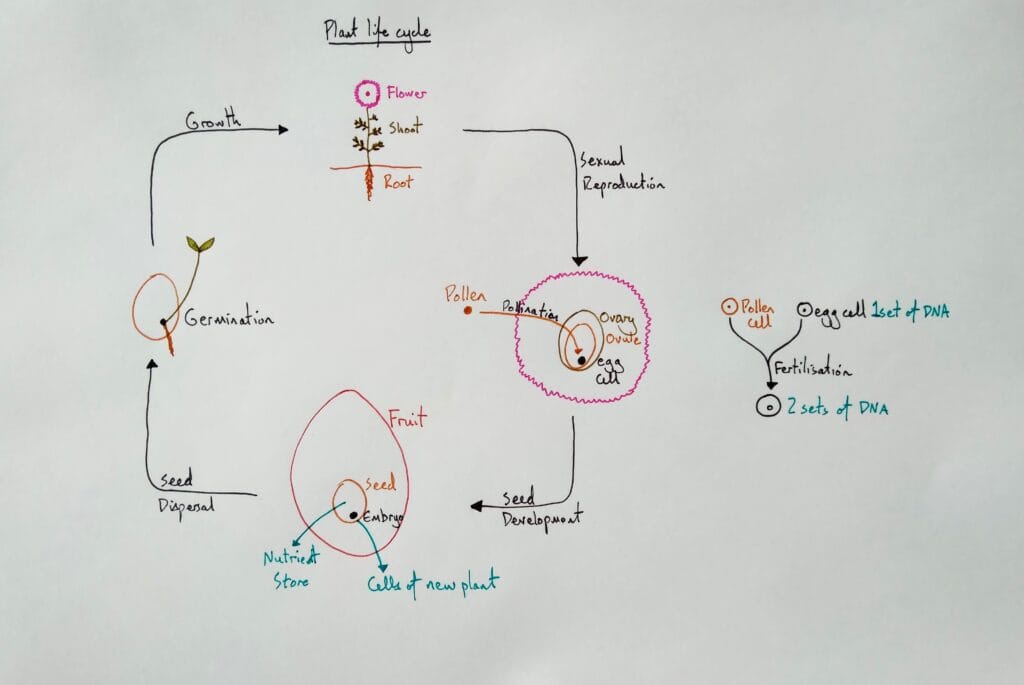
It always surprises me how students, no matter the age, have no idea that fruits come from flowers. This lesson brings many every-day experiences (pollen, flowers, fruits, nuts, seeds) into a coherent narrative.
Plants as autotrophs and heterotrophs
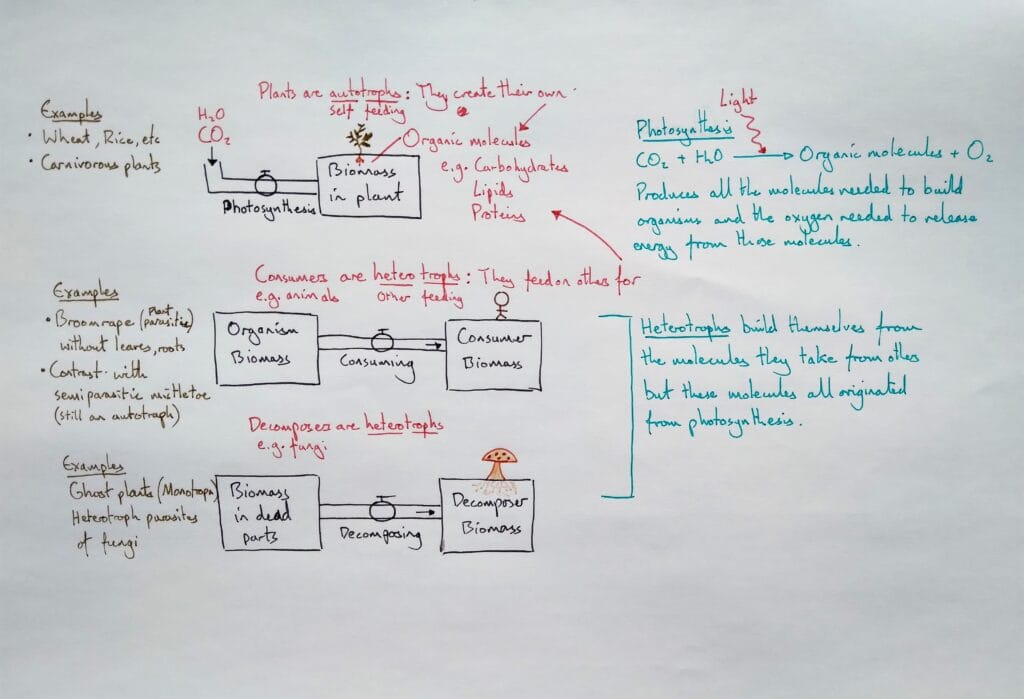
Continuing with my fundamental focus on autopoiesis, I begin with drawing the distinction between ways of self-building: making your own organic molecules, or taking them. Hemi- and holo-parasitic plants present the perfect contrasts for students to see the difference between autotrophy and heterotrophy.
Photosynthesis
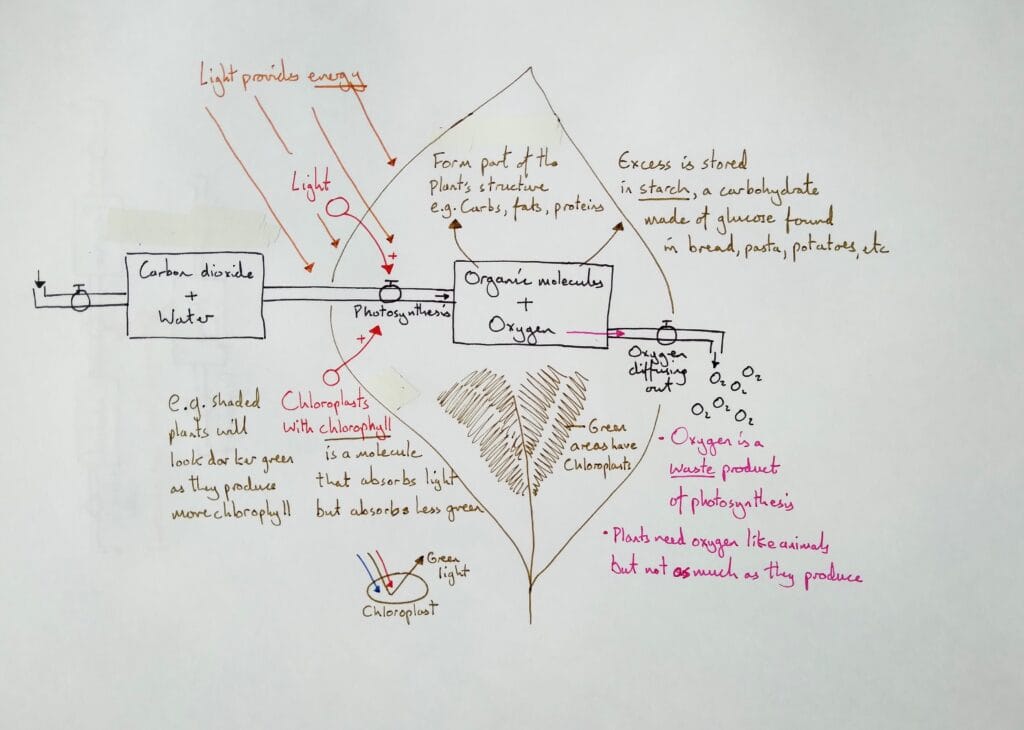
This is the first lesson our students have on photosynthesis. By this point, students are well versed in stock and flow diagrams, so this simplifies the learning. When designing models, we have to decide what matters and what to leave out. In my view, what matters is what allows students to make inferences about the world they live in. In this case, therefore, they have reactants and products of photosynthesis, plus two variables that affect its rate: light intensity and the number of chloroplasts. Students can think with this model to make predictions about the light or dark they expect leaves to be.
Leaf starch
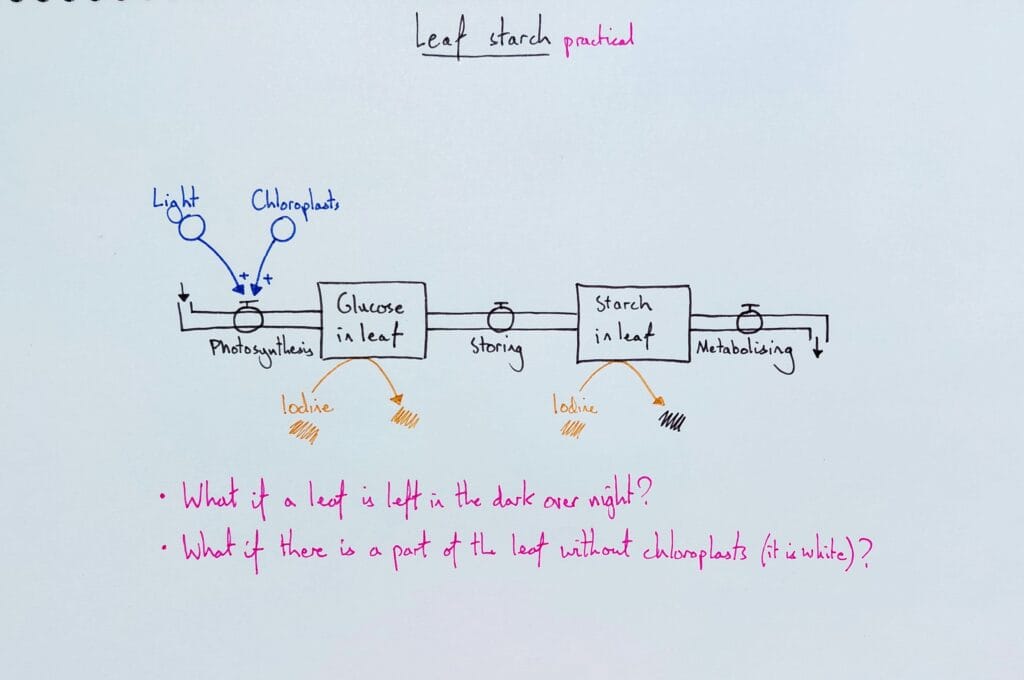
This model supports the canonical leaf-starch lab practical, first created by Julius Sachs.
The relationship between photosynthesis and respiration
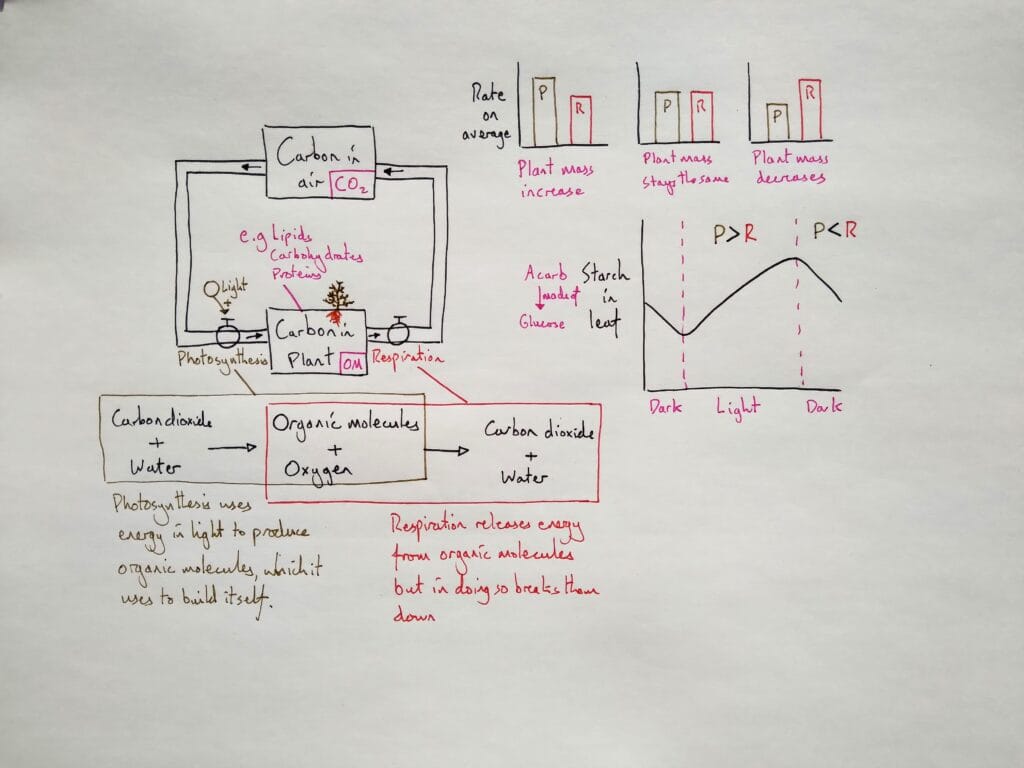
I explain this lesson in this post.
Limiting factors of photosynthesis
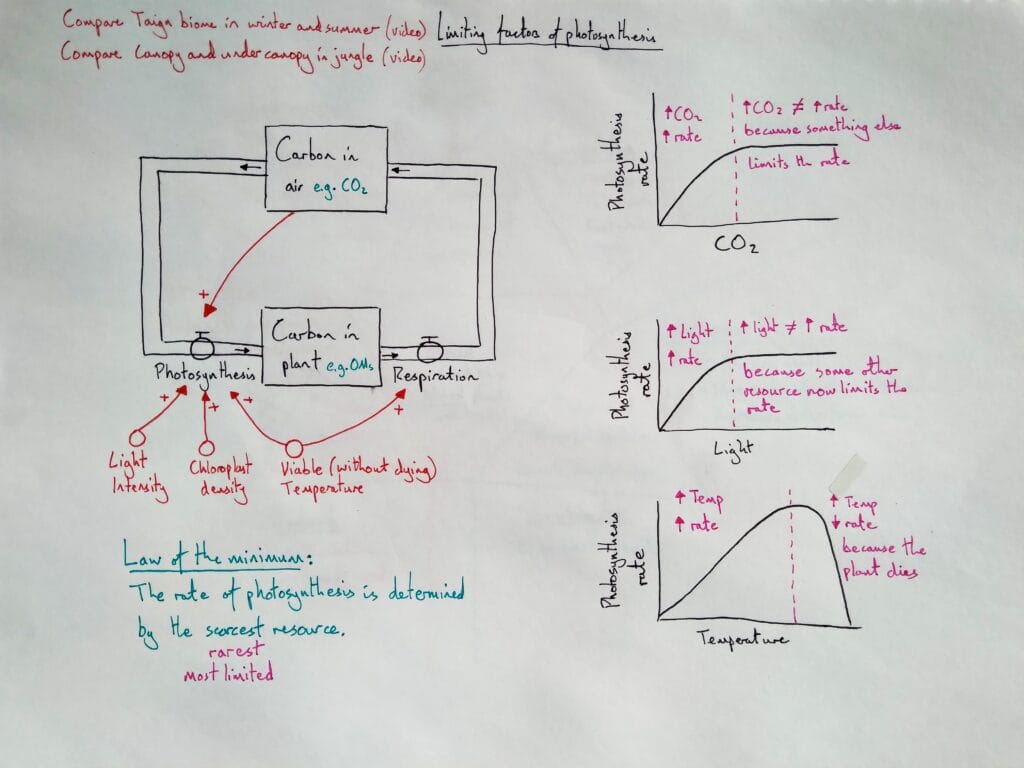
See this post to understand how I teach with this model.
Predicting the relationship between respiration and photosynthesis
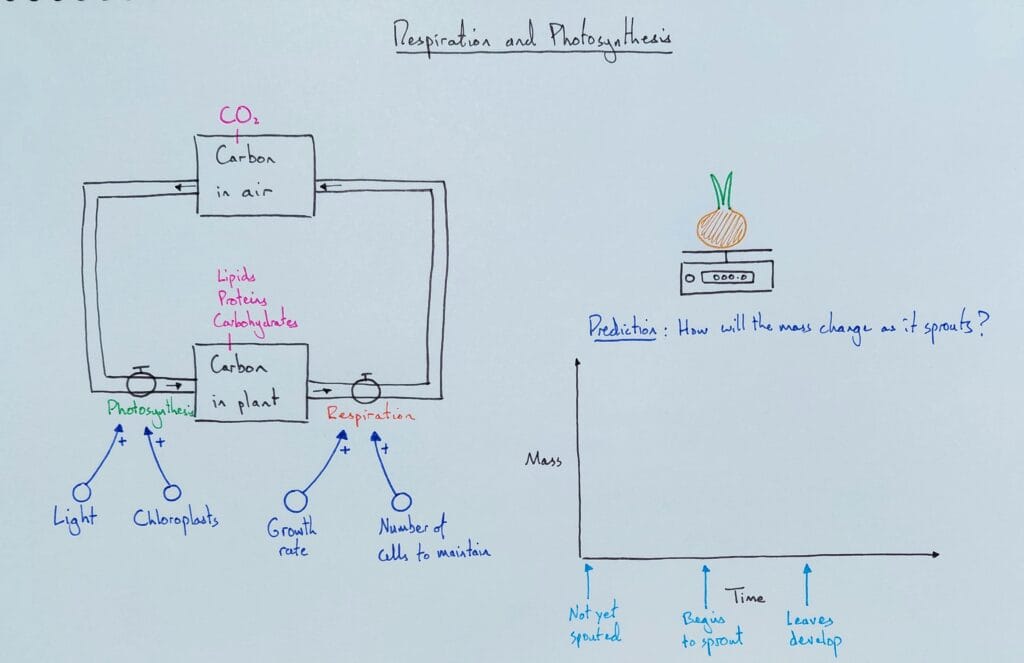
One thing is predicting the consequences of photosynthesis and respiration within a model; another thing entirely is using the model to predict phenomena you’ll witness in an organism. As I argue in Biology Made Real, what makes biology meaningful is perceiving how the ideas students learn affect the lives of organisms. In this lesson, students build the stock and flow structure using what they remember from the previous lessons. Then, after discussing the onion and task, they must decide what variables to add to the model. Then, they draw a line as a prediction, and the class continues measuring the onion over time to see what happens.
CSR Theory
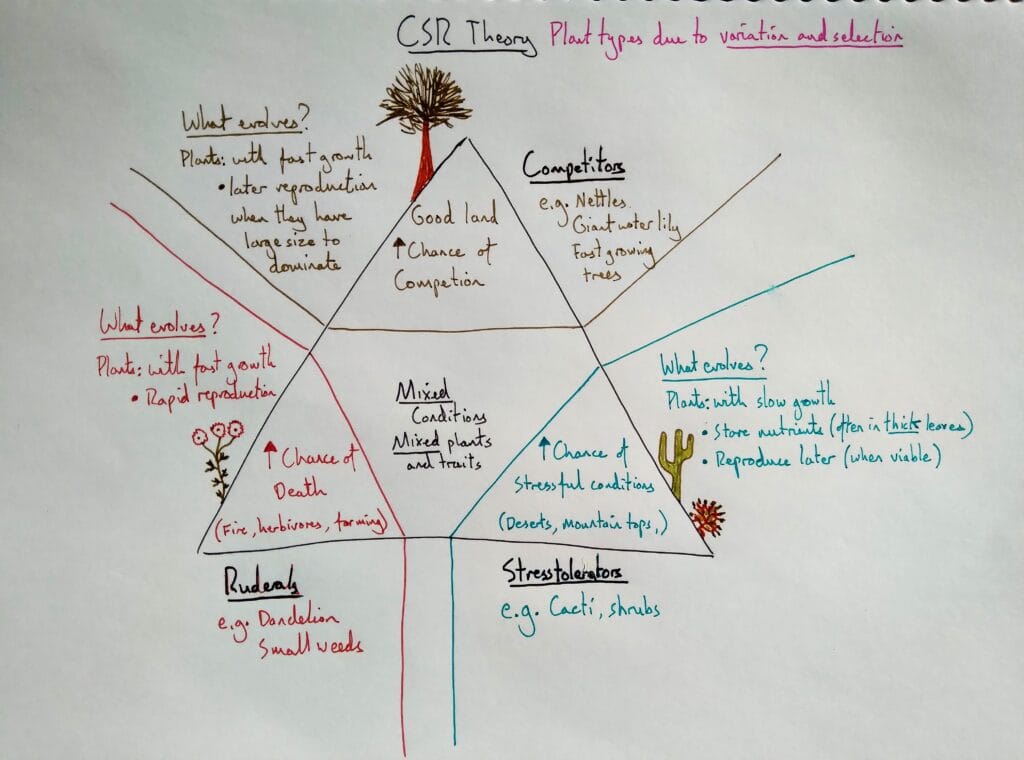
When I first read about CSR theory, I was astonished. I couldn’t believe how much I could suddenly understand and explain when just glancing at a natural landscape. Its power for school students was obvious, and I dedicated half a chapter in Biology Made Real to explaining why it deserves a place in any biology curriculum.
The theory makes a three-way distinction for ways of living (life histories), which are entirely predictable from observing whole-plant traits, such as feeling the thickness of a plant’s leaves, seeing how quickly plants flower and in what abundance. Too often, students are taught the inner workings of plants, and when in nature they see nothing of what they learn, they can’t understand or explain. We must begin with the whole plant and understand its way of being before getting into its mechanisms. In this lesson, I like to take my students outside to identify different ways of being, and if I can’t, I bring plants into the classroom.
Plant cells in photosynthesis
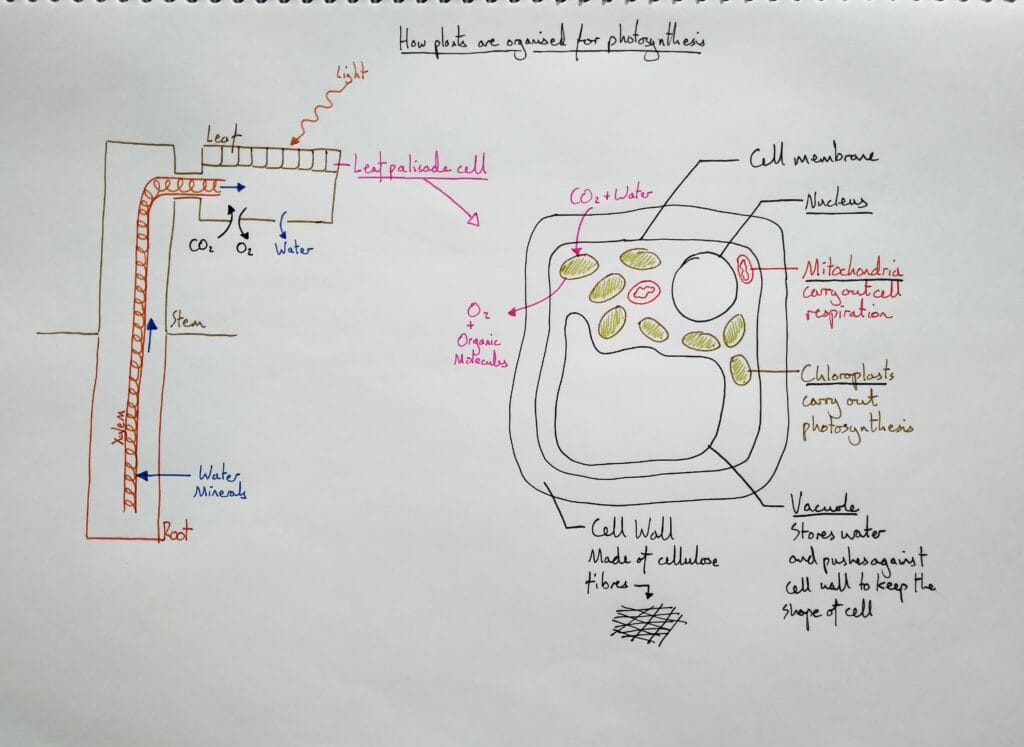
As with earlier topics on animal physiology, I like to teach about cells, not as isolated components, but as part of a larger mechanism.
Transpiration
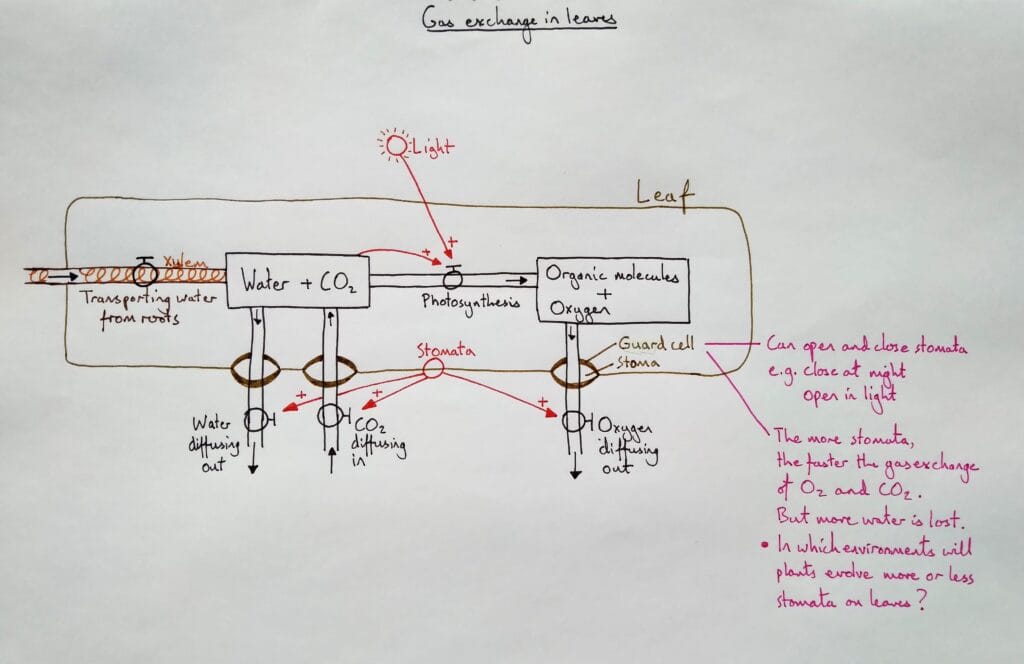
This is the most challenging of models in the topic and will take a couple of lessons to co-enact with students, step by step. Students learn about stomata and guard cells, and their roles in supporting photosynthesis. The model shows the trade-off between the requisite gas exchange of oxygen and carbon dioxide and the loss of water. Students can think with this model to make predictions about plants adapted to different biomes, wetter or drier, and consider their growth rates (relating to CSR theory).
Flowers and reproduction
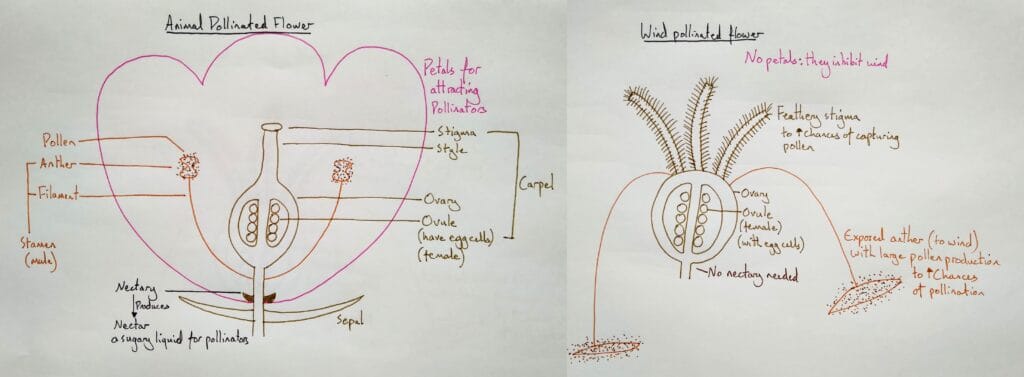
This model contrasts the parts of animal-pollinated and wind-pollinated flowers. The contrast gives the meaning: what difference do they make?
Seed dispersal
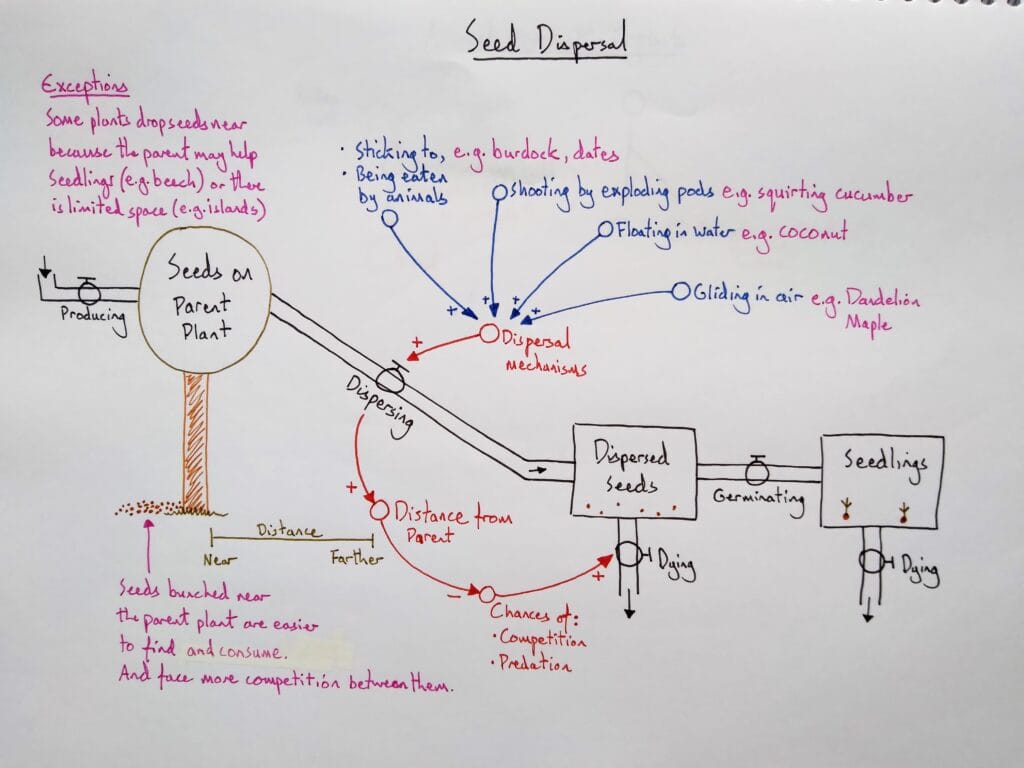
This stock and flow model allows students to make inferences about seed dispersal mechanisms, which will be more effective, and why?
Asexual reproduction
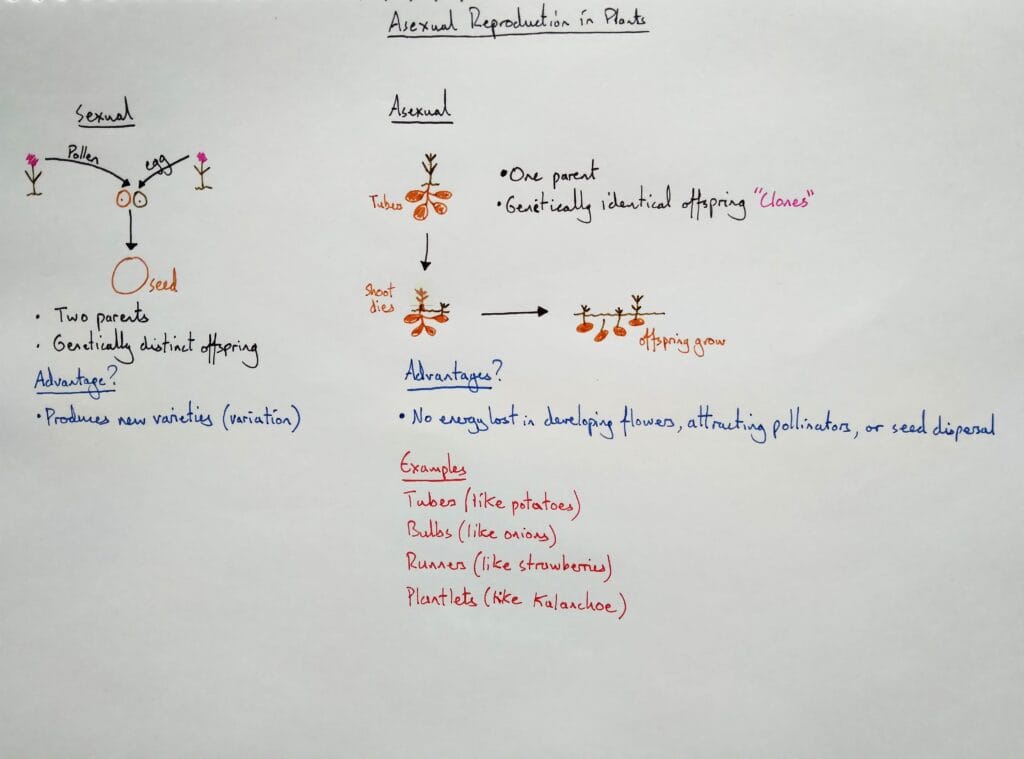
The topic finishes by considering how plants are very capable asexual reproducers. Many examples are brought into the classroom for students to observe.
Learn how to teach this way in my books: