Models (11–14): Pathogens & Immunity
In my school, this topic is taught to 13–14-year-olds. Often, it’s left till later. The motivation for including it earlier was two-fold. Firstly, I wanted students to have a grasp of the diversity of life. We start early with a focus on animals and plants. Sometime is given to fungi. But students nowadays hear so much about viruses and bacteria in the context of illness. We must invite them early to discuss these as biologists do. The second reason is to ensure students understand vaccines earlier in their education, at least with a simple model.
Pathogens
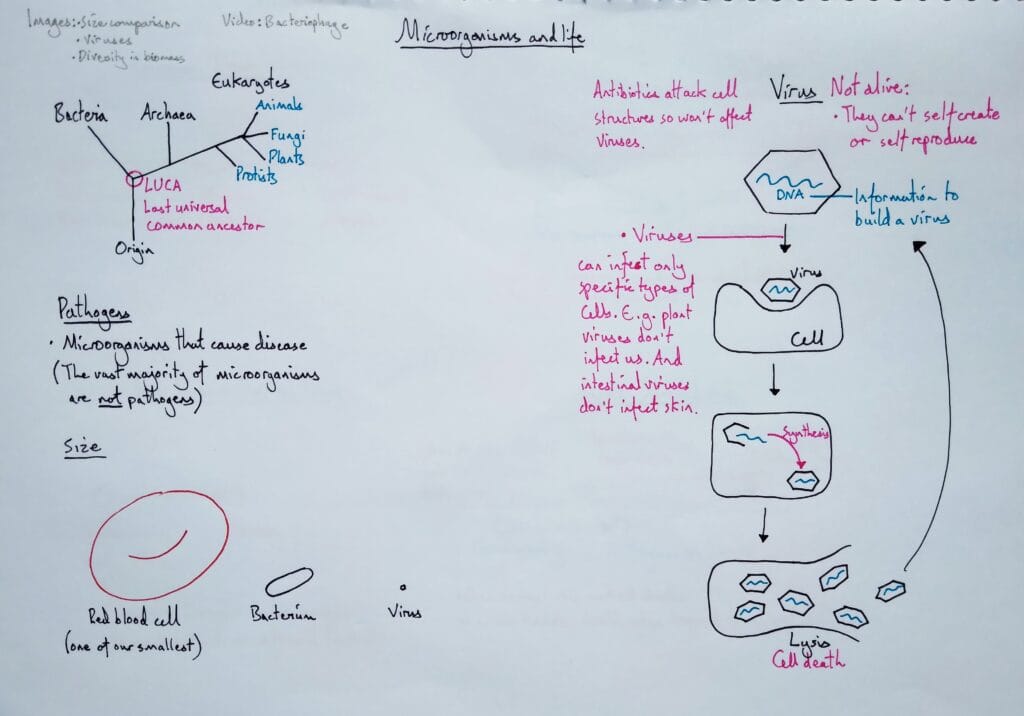
The key distinction in this lesson is between life and nonlife: the virus is an extreme form of a nonliving parasite.
The history of disease theories
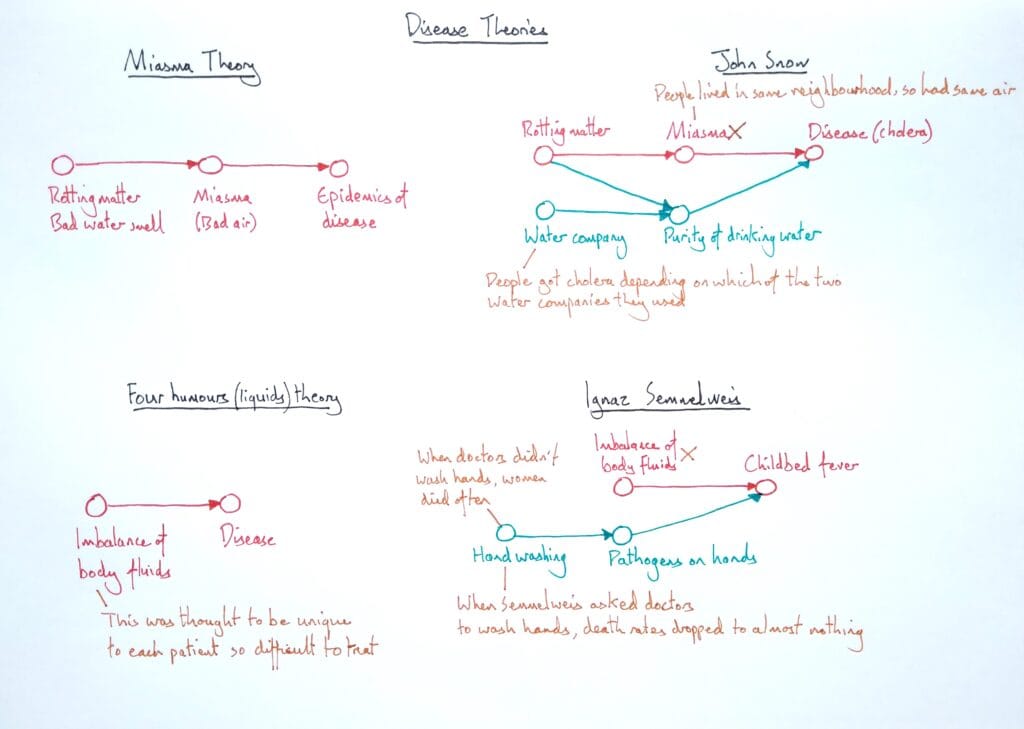
Folk theories of disease still abound; just think of when a wet day appears after summer, and all the (already existing) viral illnesses are blamed on it. This lesson goes through the two canonical examples that moved biology towards germ theory. I’ve used a form of causal diagram I explain here.
Planning an experiment on microorganisms
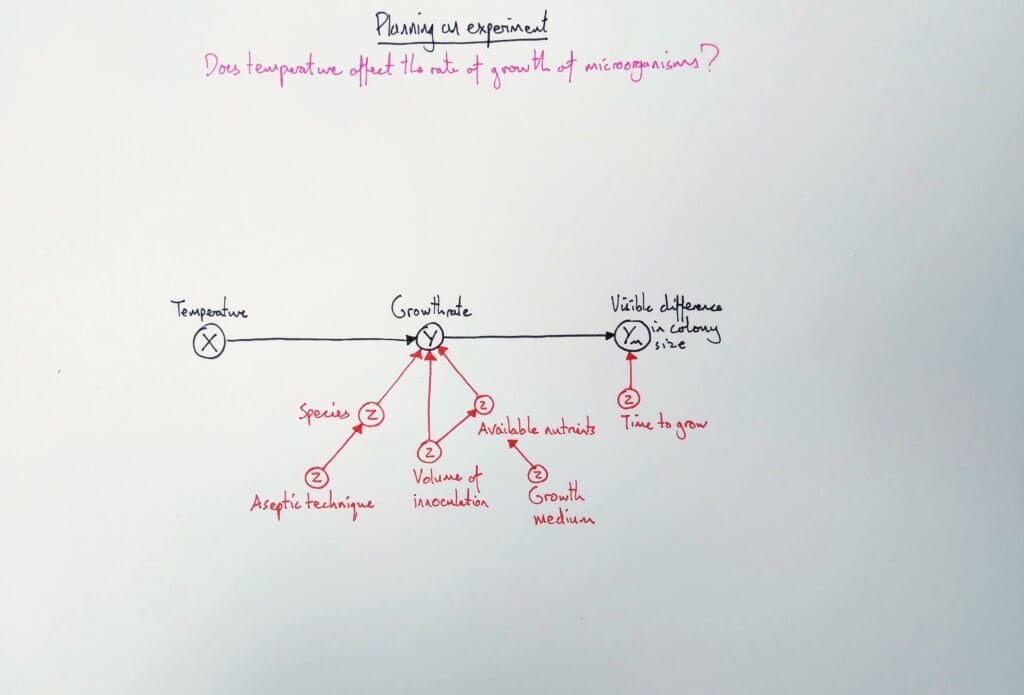
From the first year of secondary biology education at my school, I teach my students to use causal diagrams to plan and think through experiments. You can read about them here. In this case, students plan an experiment to see the effect of temperature on bacterial growth rates. They then carry out the experiment by inoculating agar plates and learning about aseptic technique.
Immune response and phagocytes
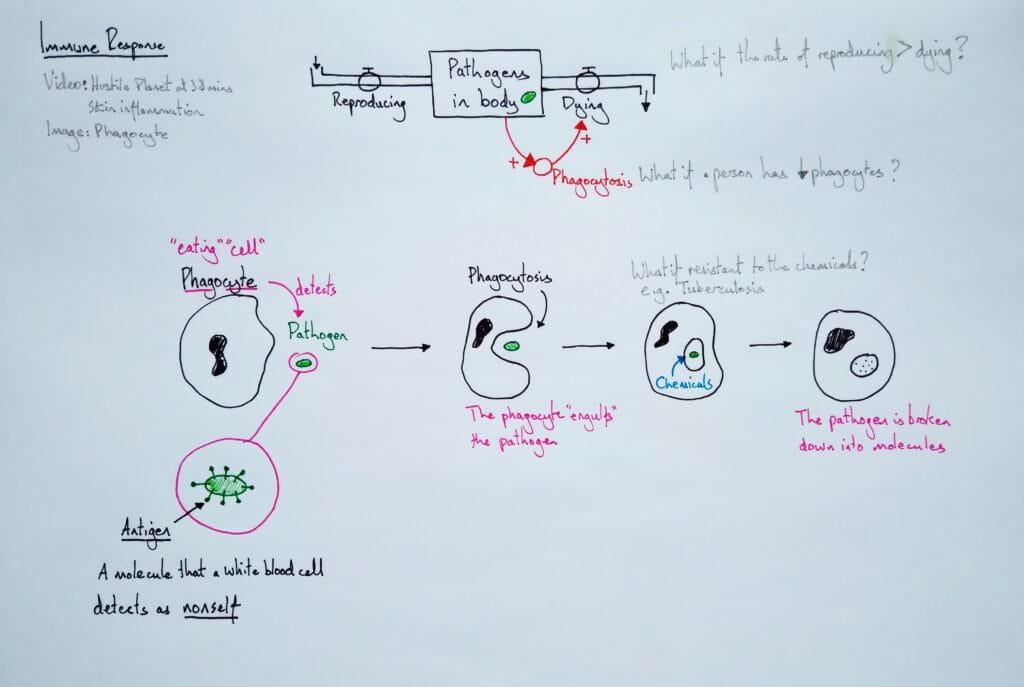
If the end goal of this topic is to understand vaccination, then mechanisms of the immune system must also be taught. This lesson begins with phagocytosis. The simple stock and flow model will be extended in the next lesson, and I will extend it further when we return to immunity in lessons for 14–16-year-olds.
Lymphocytes and antibodies
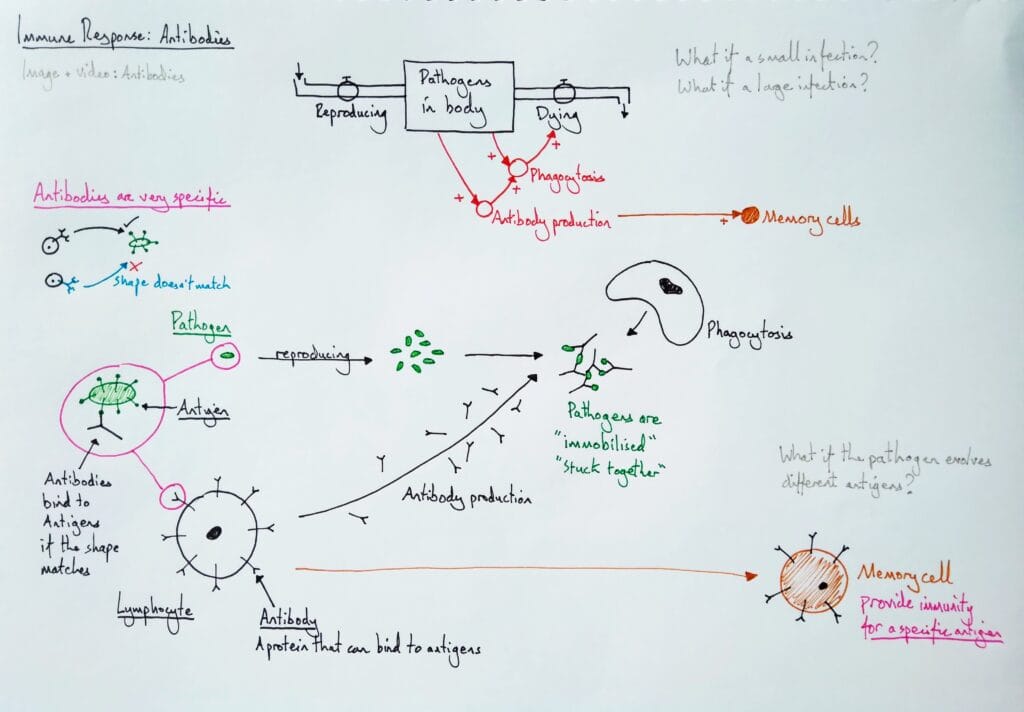
The immune system can rapidly become complex. Phagocytosis is simple enough to understand, but vaccinations require antibody production. This model was designed to be simple enough to understand and also minimally sufficient to understand how vaccinations work.
Vaccination
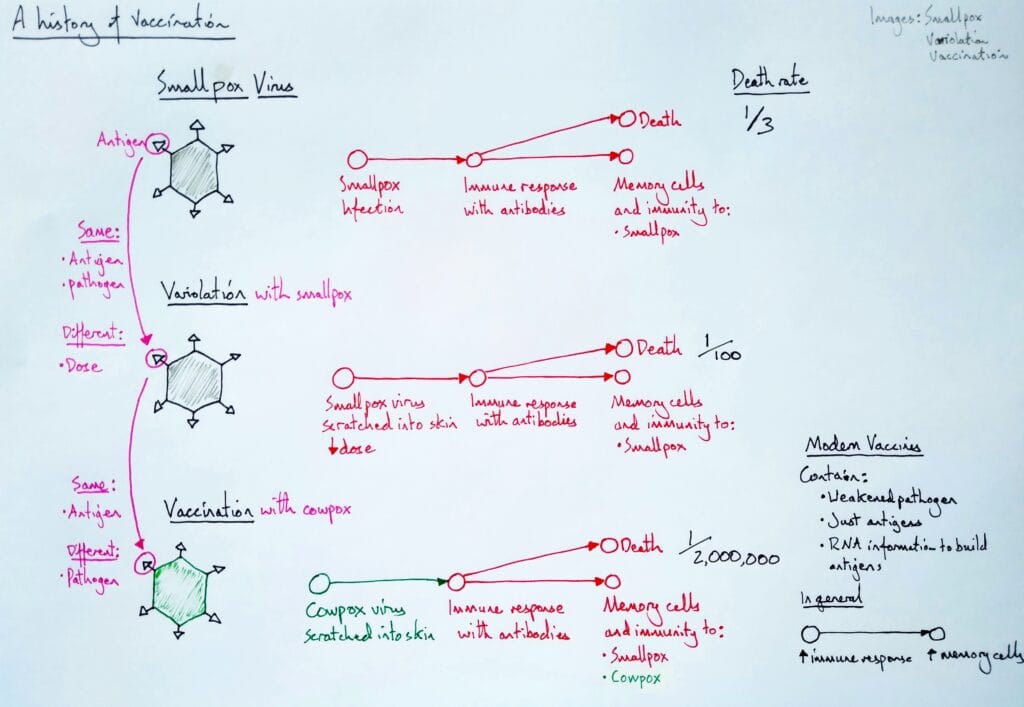
The mechanism that allows vaccinations to work was covered in the previous lesson. In this lesson, I focus on the history of vaccination, the story of smallpox. Two key distinctions are explored. Firstly, to trigger immunity, we can keep the antigens the same while varying the severity of infection. And secondly, therefore, there is a difference in the probability of death between the options. There is still a probability of injury and death with vaccination, but given the choice, you’d take it.
Discover how to teach with just diagrams and conversation in my books: